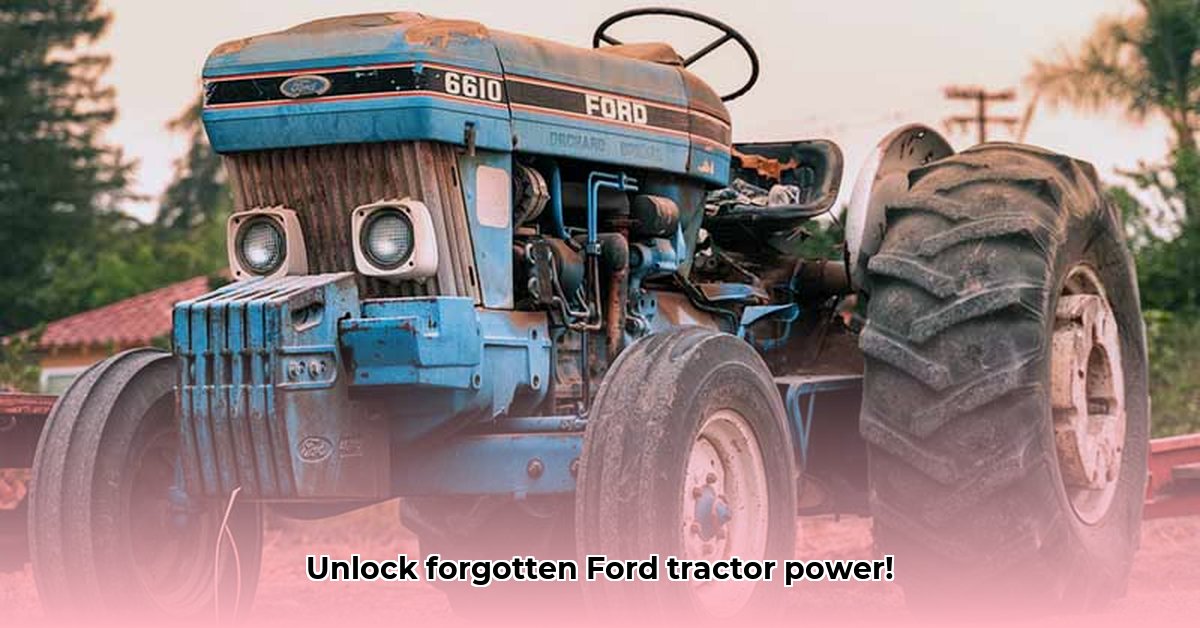
Old Ford Tractors: A Legacy of Sustainable Farming
The low, steady rumble of an old Ford tractor—a sound that evokes images of sun-drenched fields and hardworking farmers—is more than just nostalgia. It represents a pivotal moment in agricultural history and a surprisingly significant chapter in the ongoing pursuit of sustainable farming. These aren't just museum pieces; many still work hard on farms today, quietly contributing to environmentally conscious food production. This article explores how these trusty machines became symbols of sustainable agriculture, examines their mechanics, and discusses their enduring relevance. For more information on restoration, see this helpful website.
The Iron Horse That Revolutionized Farming
Before GPS-guided giants and automated harvesters, the old Ford tractor—particularly the 9N and 8N models—was a game-changer. Imagine a time when back-breaking manual labor was the norm. Then came Ford's comparatively affordable and easily maintained tractors, democratizing farm technology. Smaller farms suddenly achieved greater productivity and efficiency. This was crucial because it allowed for more effective land management, reducing the need for environmentally damaging intensive farming methods. How did these simple machines contribute to sustainability?
Beyond Horsepower: Sustainable Practices in Action
The impact of old Ford tractors extended far beyond efficiency. They inadvertently facilitated sustainable practices now widely championed. For example, the reduced reliance on manual labor meant less soil compaction from foot traffic. This seemingly small detail resulted in healthier soil, better nutrient and moisture retention. Furthermore, these tractors enabled farmers to adopt crop rotation and reduced tillage, minimizing soil erosion and preserving fertile topsoil. This long-term land stewardship is a core principle of sustainability. Did this simple technology inadvertently pave the way for widespread adoption of these methods?
Another key factor? Adaptability. Farmers readily modified and equipped these tractors with a variety of implements, minimizing waste by reducing the need for specialized equipment for every task. This self-reliance, a hallmark of sustainable farming, reduced reliance on external services and fostered a culture of resourcefulness. This approach minimized environmental impact through reduced resource consumption – a win-win scenario.
The Mechanics of Sustainability: Simplicity's Enduring Power
What made these tractors so impactful? Their ingenious simplicity. The 9N, for instance, was designed for easy maintenance and repair, often performed by the farmers themselves. This reduced costs and minimized downtime, contributing directly to the overall sustainability of the farm operation. The readily available parts further ensured efficient operation. This self-sufficiency fostered resourcefulness and problem-solving skills, highly valuable in modern sustainable agriculture. The simplistic design also meant a smaller environmental footprint during manufacturing.
Their durability is another critical element. Many served farmers for decades, significantly reducing the environmental impact associated with frequent equipment replacements. This longevity challenged the throwaway culture, standing in contrast to the rapid obsolescence of much modern technology. Many restored examples testify to their robust build and the care provided by generations of farmers.
The Old Ford Tractor in the Modern World: A Timeless Legacy
Even today, the old Ford tractor represents sustainable agriculture. While modern farming utilizes advanced technology, the principles these machines championed—efficient land management, soil conservation, reduced environmental impact—remain central to sustainable agriculture. Many modern sustainable farms still utilize these workhorses, valuing their simplicity and durability. This enduring legacy underscores the enduring importance of these seemingly simple machines. Why is their influence still so significant today?
The old Ford tractor transcends its function as a machine; it symbolizes a time when farming was deeply connected to the land. It's a reminder of simpler times and sustainable practices, a legacy inspiring new generations of sustainable farmers.
A Comparison: Old Ford vs. Modern Tractor
| Feature | Old Ford Tractor | Modern Tractor |
|---|---|---|
| Technology | Simple mechanics; easily repairable | Sophisticated electronics; complex systems |
| Sustainability | Reduced tillage; adaptable; long lifespan | Variable; depends on specific technology and practices |
| Maintenance | Relatively easy; often farmer-maintained | Requires specialized technicians and tools |
| Cost | Initially affordable; inexpensive to maintain | Significantly more expensive; high maintenance costs |
| Environmental Impact | Generally lower due to longevity and simple design | Potentially higher due to manufacturing and energy use |
The old Ford tractor's story is a testament to human ingenuity, the strength of sustainable practices, and the lasting impact of simple, reliable technology. It serves as a valuable reminder as we seek sustainable solutions to feed a growing global population. What lessons can modern agriculture learn from this enduring legacy?